

REHOVOT, ISRAEL — August 26, 2026 — Every three to five days, the layer of cells lining our intestines is completely renewed – the fastest turnover rate in the human body. Such rapid regeneration is an absolute necessity for tissue that endures constant mechanical stress as well as an abundance of bacteria and contaminants. But what happens to the “glue” that holds these cells together? Does it, too, recover quickly from damage?
In a new study published today in Immunity, Weizmann Institute of Science researchers show that long after the gut has recovered from an acute illness, irreversible changes can persist in the material between its cells. This negative “memory” rewires intestinal stem cells and prevents normal regeneration – potentially leading to chronic inflammatory bowel disease. The findings, from the laboratories of Prof. Irit Sagi and Dr. Moshe Biton, point to new avenues for diagnosing and treating inflammatory bowel diseases. More broadly, they fundamentally change our understanding of the material surrounding cells – the extracellular matrix, or ECM – and its role in tissue regeneration and disease development.
Inflammation is a beneficial immune response designed to cope with tissue damage or the invasion of a foreign agent, but when it spirals out of control, it becomes a disease in its own right. Naturally, most scientists studying inflammatory diseases focus on immune cells and the substances they secrete. In Sagi’s laboratory, however, the focus is elsewhere. Its research centers on the ECM, the supportive network of proteins and sugars that surrounds cells in the body’s various tissues and that was once considered little more than unimportant packaging material. In 2021, Sagi’s lab showed that changes in the intestinal ECM of mice could enable early diagnosis of inflammatory bowel disease, even before the disease could be detected by colonoscopy or biopsy.
While working on that study, Dr. Idan Adir of Sagi’s group noticed a surprising phenomenon: Both short-term and chronic intestinal inflammation produced similar changes in the ECM of mice. “That’s how we came up with the hypothesis that the extracellular matrix has a ‘memory,’ and that severe initial damage can alter it irreversibly,” Sagi explains. Chronic inflammatory bowel diseases, such as Crohn’s disease and ulcerative colitis, damage the mucosal tissue lining the intestinal wall and are characterized by recurring inflammatory flare-ups. These diseases often emerge following transient intestinal damage – for example, as a result of certain medications, stress, or smoking – but despite countless studies, it remains unclear why in some cases temporary damage develops into chronic disease.
To investigate this question, the new study – led by Adir under the guidance of Sagi and Biton, both of Weizmann’s Immunology and Regenerative Biology Department – used mouse models of acute intestinal inflammation and tracked the lasting effects of the short-term inflammation for more than a year.
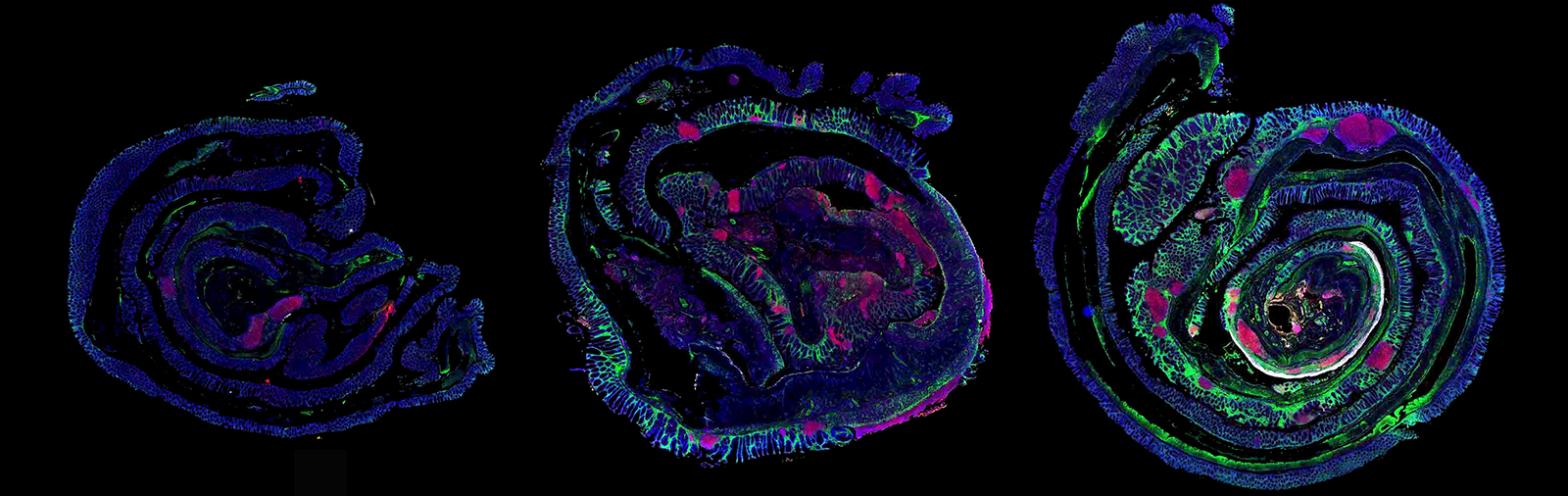
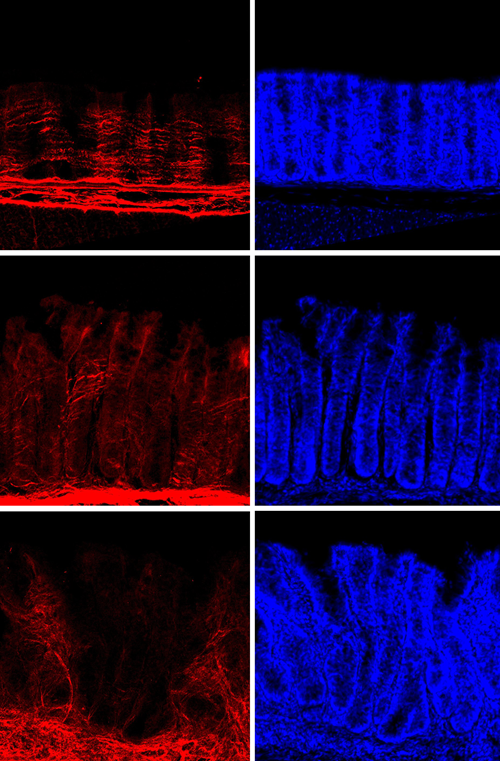
“During acute inflammation, immune cells accumulate in the intestinal lining and secrete protein-cleaving enzymes that break down the extracellular matrix,” Sagi says. “A month after the start of the experiment, all the mice had recovered, but their ECM refused to forget the injury. The tissue failed to regenerate properly, and the shape of the intestine remained distorted even 80 days later. In fact, the ECM lost its characteristic stiffness; it became porous, and its structure remained disrupted even after 400 days.”
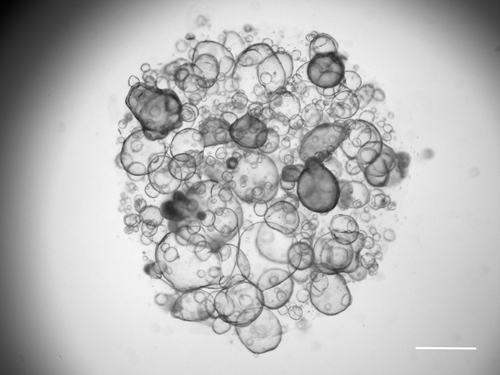
To understand the effects of these persistent changes in the ECM, the researchers used miniature three-dimensional versions of the intestine, known as organoids, which are grown in the laboratory from stem cells. Biton’s laboratory specializes in this approach, which makes it possible to identify factors that promote or impair normal tissue regeneration.
Biton’s lab had previously found that chronic inflammatory bowel diseases are associated with changes in stem cell function. The researchers therefore used organoids to investigate whether the ECM might be responsible for these changes. They grew healthy stem cells on disrupted ECM sampled from mice during and after acute intestinal inflammation. Instead of maturing into intestinal lining with a normal three-dimensional structure, the stem cells exposed to the damaged matrix formed a shapeless sheet. RNA sequencing revealed that rather than developing into normal intestinal cells, the stem cells had matured into inflammation-fueling epithelial cells that secrete chemical signals attracting immune cells, thereby promoting chronic intestinal inflammation.
Sagi stresses that “the new study could have implications far beyond inflammatory bowel disease."
“Growing stem cells as organoids within a disrupted extracellular matrix was enough to change their fate,” Biton says. “Using a single-cell RNA sequencing database and seven biopsies from patients with ulcerative colitis, we found that these same pro-inflammatory epithelial cells also characterize inflamed regions in human patients. These findings make it clear that the extracellular matrix plays a critical role in chronic inflammation and could potentially make it possible to predict which regions will develop inflammation or experience a future flare-up. More broadly, the new study reveals just how central the ECM is in creating a microenvironment, or niche, that supports stem cell regeneration.”
A memory etched in protein
Why intestinal tissue regenerates normally after acute inflammation in some cases but not in others remains an open question. But in the meantime, the researchers found a potential culprit: They identified a protein called collagen 18 as being responsible for “rewiring” stem cells during the development of chronic inflammation. In a previous study, Sagi showed that the accumulation of collagen 18 in the ECM is an early marker of inflammatory bowel disease. Now it turns out to be much more than a marker. Collagen 18 can trap signaling molecules, thereby interfering with signaling pathways to stem cells and causing them to differentiate into pro-inflammatory epithelial cells.
When the researchers silenced collagen 18 expression, the mice’s ECM did not sustain irreversible damage, and chronic disease was prevented. These findings reveal that collagen 18 is a key player in normal mucosal regeneration and that the ECM serves as a kind of “logistics hub,” storing and regulating signaling molecules. The findings also point to collagen 18 as a potential target for future therapies aimed at preventing chronic disease in people at risk or averting flare-ups.
Sagi stresses that the new study could have implications far beyond inflammatory bowel disease. “Until now, we assumed that the ECM returned to normal after injury, but it is now clear that it ‘remembers’ and changes throughout our lives,” she says. “Because the ECM is found throughout the body, deciphering the changes it undergoes before and during disease could help us diagnose and treat a wide range of conditions. Although in the present study we focused on one specific protein, when the ECM changes, countless proteins are cleaved or accumulate. Fragments of these proteins can sometimes be detected in the blood, and we are currently developing a technology to harness this phenomenon for the diagnosis of different diseases.”
“Therapies targeting the immune system have revolutionized the treatment of inflammatory bowel disease, but many patients still experience severe flare-ups,” Biton says. “Now that we understand that changes in the ECM shape the fate of stem cells, and that these processes underlie the inflammatory response, it is clear that existing treatments address the end result rather than the root of the problem. We hope our discoveries will ultimately lead to a therapeutic approach that addresses the entire chain of tissue regeneration – from the ECM, through the stem cells, all the way to the immune response.”
Also participating in the study were Dr. Carmel Sochen, Aviya Habshush-Menachem, Dr. Sacha Lebon, Barak Toval, Vladyslav Holiar and Dr. Natalia Davidzohn of Biton’s group; Dr. Sivan Gelb and Dr. Inna Solomonov of Sagi’s group; Dr. Tomer-Meir Salame of Weizmann’s Life Sciences Core Facilities Department; Dr. Irit Rosenhek‑Goldian of Weizmann’s Chemical Research Support Department; Dr. Simonas Savickas, Dr. Fabio Sabino and the late Prof. Ulrich auf dem Keller of the Technical University of Denmark; Prof. Valerio Izzi and Prof. Taina Pihlajaniemi of the University of Oulu, Finland; and Prof. Bella Ungar, Dr. Alon Abend and Dr. Ehud Zigmond of Sheba Medical Center, Tel Hashomer.
Dr. Moshe Biton’s research is supported by the Moross Integrated Cancer Center; the Belle S. and Irving E. Meller Center for the Biology of Aging; the Abisch-Frenkel RNA Therapeutics Center; the Dwek Institute for Cancer Therapy Research; the Shimon and Golde Picker – Weizmann Annual Grant; and the Another Light Foundation.
Dr. Biton is the incumbent of the Ernst and Kaethe Ascher Career Development Chair.