

REHOVOT, ISRAEL — August 10, 2026 — When a wound does not heal properly, it leaves a scar. Similarly, mutations – which are permanent changes to genetic code – are often the result of damaged DNA that has not been properly repaired. Mutations can impede the function of genes and lead to disease and aging, but they are also the source of genetic variety, which allows new traits to emerge and facilitates the evolutionary process. Scientists still do not fully understand why some damaged DNA segments are successfully repaired while others are not. In a new study published in Nature Communications, researchers from the Weizmann Institute of Science succeeded in identifying which DNA sequences and structures are the preferred targets for several of the most important DNA repair enzymes. The findings from the laboratory of Dr. Ariel Afek suggest that these preferences shaped the human genome and could even help explain how cells become cancerous.
Every day, thousands of chemical reactions take place in every living cell, damaging the genome. “When DNA repair systems work properly, they repair most of the damage, but not all of it,” Afek explains. “Therefore, the rate at which mutations accumulate is a balance between the rate of damage and the rate of repair. This balance varies across different areas of the genome, and we still do not understand why certain mutations manage to accumulate in specific regions. Most studies to date have focused on changes that leave a ‘scar’ – a mutation. But to fully understand these changes, we must also consider the genetic ‘wounds’ themselves, including those that are repaired without leaving a trace.”
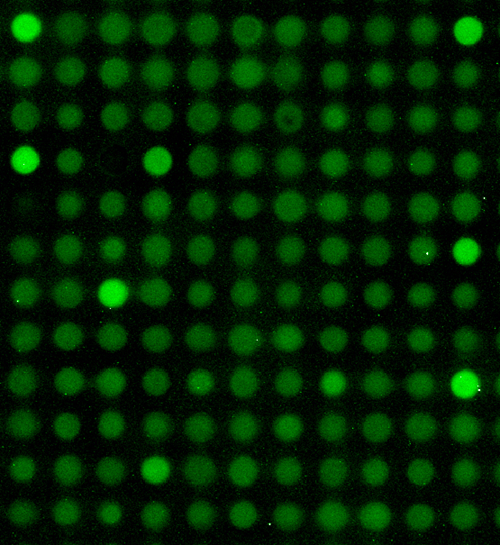
In this new study, Afek’s team sought to characterize where in the genome repair enzymes succeed and where they are less effective. To do this, they developed a chip with thousands of short DNA molecules attached to it, all carrying the same genetic damage but different surrounding sequences.
“We discovered that, like a good editor examining every word in its context, the three repair enzymes we tested are sensitive to the exact combination of genetic letters, or bases, surrounding the error site,” says doctoral student Noga Levy from Afek’s lab, who led the study. “Even bases located five positions upstream or downstream on the ladder affect how likely the repair enzymes are to recognize the damage site and bind to it. When we delved into the preferred sequences, we found that they share common structural features. One of the enzymes, for example, preferred sequences that create an exceptionally narrow region in the helical ladder.”
In order to understand why that enzyme prefers a specific structure, the Weizmann scientists joined forces with a research team headed by Prof. Brian P. Weiser from Rowan University in New Jersey to run a computer simulation. They found that one of the enzyme’s amino acids scans the area surrounding the damage site and is attracted to the negative electrical charge that characterizes narrow regions of the ladder.
Next, they tested whether the preferences of the repair enzymes affected how mutations accumulated in the genome over the course of evolution. A DNA molecule looks like a spiral staircase, in which each step is made of a pair of bases. Under normal conditions, there is a base-pairing match: Base A always pairs with T, and C with G. One of the most common forms of genomic damage occurs when a C base is replaced by a different base, disrupting this pairing. Several of the most important DNA repair enzymes are responsible for identifying and removing the incorrect base. The scientists hypothesized that regions where repair enzymes operate efficiently would retain more C bases, while unrepaired changes would accumulate in other regions. And indeed, they found a correlation of exactly that kind for one of the repair enzymes.
“This finding paves the way for a better understanding of the course of human evolution,” Afek explains. “To identify which genomic changes were adopted by humans to survive a changing environment, we must first understand which changes accumulate naturally due to the preferences of the repair mechanisms.”
“Since failures in repair mechanisms are a primary driver of cancer, my hope is that understanding them will pave the way for new, more targeted therapies.”
Mutations are not only a force driving momentous evolutionary changes over billions of years, but also changes that take place in the body of a single person over the years. Cancerous tumors, for example, stem from a single cell in the body whose accumulated mutations cause it to multiply uncontrollably. “We found a correlation between the repair enzymes’ preferences and mutational signatures – patterns of mutations – in human tumors,” Levy adds. “One possibility is that a process in the bodies of cancer patients damaged the repair enzymes, allowing mutations to pile up in areas that were previously protected. Alternatively, over the course of evolution, the repair enzymes may have adapted to target regions that are inherently more vulnerable. Either way, this reinforces our understanding that repair mechanisms play a key role in how cancer develops.”
This study offers a fascinating new way of exploring the cell’s DNA repair system, and another project in Afek’s lab, led by graduate student Noga Carmon, has already expanded the scope to other repair mechanisms. “Understanding how repair mechanisms ‘choose’ their targets opens up all kinds of ways to harness them for our own needs,” Afek says. “We already use these enzymes as tools in gene editing. A deeper understanding will allow us to fine-tune these technologies and perhaps even engineer enzymes that provide better genetic protection. Since failures in repair mechanisms are a primary driver of cancer, my hope is that understanding them will pave the way for new, more targeted therapies.”
Also participating in the study were Dr. Vered Levin Salomon, Dr. Naama Kessler, and Omer Erez from Weizmann’s Chemical and Structural Biology Department; and Sharon N. Greenwood and Dr. Matthew Wang from Rowan University in Stratford, New Jersey.
Dr. Ariel Afek’s research is supported by the Swiss Society Institute for Cancer Prevention Research; the Helen and Martin Kimmel Institute for Magnetic Resonance Research; the Abisch-Frenkel RNA Therapeutics Center; the Jean-Jacques Brunschwig Fund for the Molecular Genetics of Cancer; the Shimon and Golde Picker – Weizmann Annual Grant; and the Joel and Mady Dukler Fund for Cancer Research.