
Improving Health & Medicine

Pandemic in Fast Forward

Israeli and Czech scientists recreated the coronavirus’s evolutionary journey in a test tube –
revealing the conditions that can produce highly contagious variants.

Pandemic In Fast Forward 1
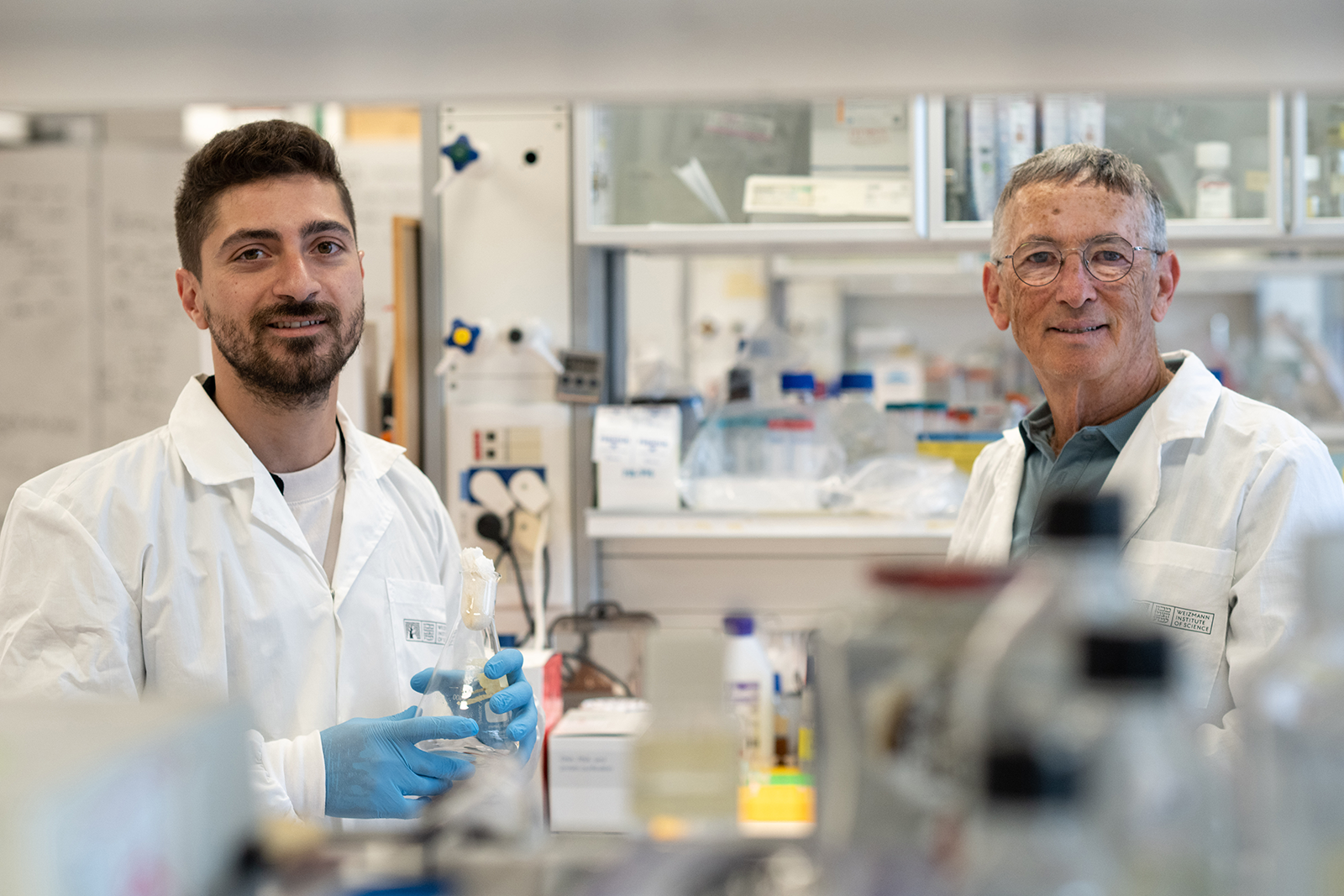
(l-r) Aviv Shoshany and Prof. Gideon Schreiber

REHOVOT, ISRAEL — June 1, 2026 — A key step in the origin of many pandemics occurs when an animal-borne virus infects humans and then evolves to spread more efficiently from person to person. That is why scientists and physicians keep a close watch on viruses that could jump from animals to humans, such as emerging strains of avian flu and bat coronaviruses, as well as viruses that have already crossed into humans but, for now, spread poorly among people, such as hantavirus and Ebola. 

Researchers have now recreated in a test tube, within just a few months, the evolutionary path the coronavirus followed during the COVID-19 pandemic  from the original Wuhan strain to the emergence of the highly contagious Omicron variants. This achievement stemmed from a new collaboration between the laboratories of Prof. Gideon Schreiber of the Weizmann Institute of Science and Dr. Jiří Zahradník of the First Faculty of Medicine, Charles University in Prague, and BIOCEV Center. The findings, published in Nature Communications, raise hopes that in the future scientists may be able to predict how viruses are likely to evolve and under what conditions new waves of infection could emerge. 

In August 2021, Schreiber and colleagues published the results of an in vitro evolution experiment that identified a pair of mutations in the coronavirus’s binding site that make the virus highly contagious by improving its ability to bind to receptors in the human respiratory tract. About three months later, the Omicron variant was first identified in South Africa and, when researchers sequenced it, they found the exact same pair of mutations. That was the moment Schreiber realized that the in vitro evolution method developed in his lab could potentially predict major turning points in the course of pandemics. 

Evolution proceeds through mutations and natural selection. To survive and spread, viruses replicate at high speed, which can often lead to genetic errors that accumulate, producing new variants. In the new study, the researchers replicated the gene encoding the coronavirus binding site using a deliberately error-prone mechanism, thereby simulating in “fast forward” the appearance of mutations. Using genetically engineered baker’s yeast cells, they exposed millions of resulting variants to human receptors and, imitating natural selection, retained only those that still bound successfully. By repeating cycles of mutation and selection over and over, the scientists reconstructed the evolution of the virus-human interaction over the course of an entire pandemic. 

At the starting line of this evolutionary race in a test tube were the original Wuhan strain and several variants that emerged during the pandemic, including Alpha, Beta, and Omicron. The researchers examined how their binding sites evolved under two scenarios: strong selection pressure and weak selection pressure. Strong selection pressure is a situation in which only a small number of viruses survive each evolutionary stage, allowing advantageous mutations to rapidly become dominant. The experiment simulating this scenario, conducted at the Weizmann Institute, was led by Aviv Shoshany from Schreiber’s group. Under weak selection pressure, by contrast, many viral variants survive, and advantageous mutations become enriched without taking over completely. This scenario was simulated by Ruojin Tian, Dr. Miguel Padilla-Blanco and Dr. Martin Mokrejš from Zahradník’s group in Czechia. 
Pandemic In Fast Forward 2
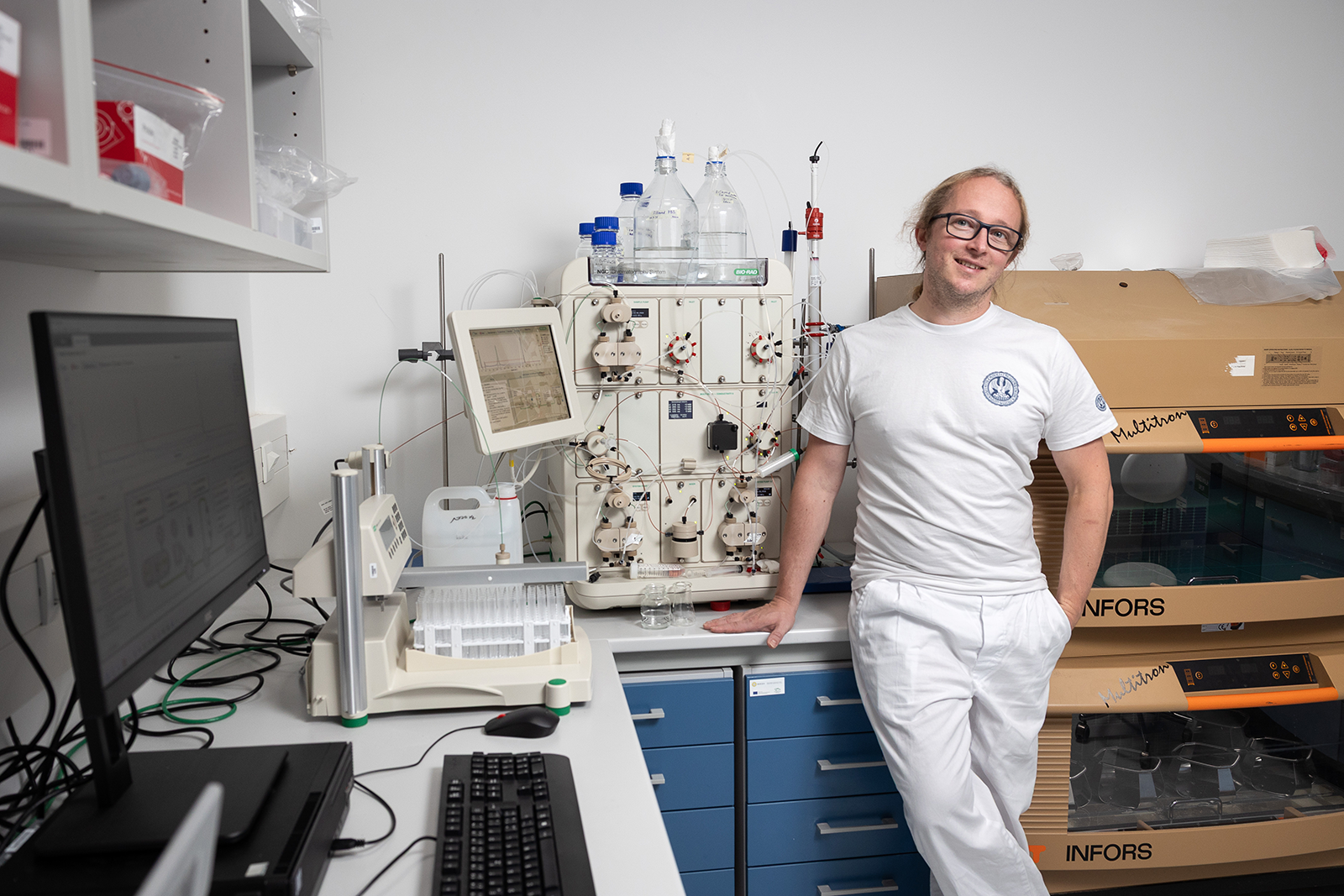
Dr. Jiří Zahradník

“No matter which viral variant we started with, under strong selection pressure a variant remarkably similar to Omicron and its sub-variants emerged early on and rapidly took over the entire population,” says Schreiber. “The exact same trajectory was observed during the coronavirus pandemic, which has not undergone another major shift since Omicron appeared and became dominant at the end of 2021. In fact, we succeeded in accurately recreating the evolutionary path of the coronavirus among billions of people over three years, all within lab experiments that lasted only a few months.” 

“Some future pandemics that spill over from animals to humans may follow a similar path – accelerated evolution culminating in the dominance of a viral variant that is highly contagious and specifically adapted to bind to human receptors,” Schreiber predicts. “We examined whether this could happen with the SARS virus (SARS-CoV-1), whose outbreak in the early 2000s remained limited. When we subjected it to in vitro evolution under strong selection pressure, a variant that binds very efficiently to receptors in the respiratory tract rapidly took over. The good news is that, thanks to its similarity to the coronavirus that caused the pandemic, we likely already possess partial immunity.” 

The Omicron mystery

The evolutionary pathway leading to Omicron dominance was not observed under weak selection pressure, and computer simulations revealed why. During the mutation process, several mutations can sometimes arise simultaneously. If one mutation gives a new viral variant a survival advantage and helps it dominate the population, other mutations – those that are neutral or even detrimental – can “hitchhike” alongside it and spread as well. The simulations showed that under strong selection pressure, advantageous mutations become dominant before the hitchhikers get a chance to accumulate. Under weak selection pressure, however, beneficial mutations drag many additional mutations with them, diminishing their own dissemination advantage. 

To this day, Omicron’s origin remains a mystery because it is genetically so distinct from other coronavirus variants. In healthy individuals, the immune system clears the virus quickly, leaving little time for it to accumulate large numbers of mutations. Researchers therefore hypothesized that Omicron may have emerged in immunocompromised individuals, whose infections can persist for months. 

Our approach makes it possible to identify dangerous variants before they become dominant, helping focus efforts on preventing the conditions that allow them to take over – and preparing for them in advance.”

“To survive in their bodies, the virus had to repeatedly fight their residual immune activity and repeatedly infect receptors in the respiratory tract,” Schreiber explains. “Those are precisely the conditions of strong selection pressure, and our study shows they are essential for the emergence of Omicron – further supporting the hypothesis that it originated in immunocompromised people. Interestingly, when we started the selection from Omicron, both strong and weak selection pressures were sufficient to maintain the Omicron sequences, explaining why this variant persists in the general population. This highlights how important it is to properly treat immunosuppressive conditions such as AIDS before the next global pandemic strikes, and to protect immunocompromised individuals from infection and chronic disease.” 

Bind or evade

Three major factors determine whether a virus will survive in humans: infectivity, structural stability, and the ability to evade the immune system. Yet the balance among these factors was unknown. 

“In our evolution experiment, at every stage we selected the variants that bound most strongly to the human receptor, and under strong selection pressure we also required them to remain stable at high temperatures,” says Schreiber. “Even though the viruses did not need to cope with an immune system at all, most of the characteristic Omicron mutations still appeared. This shows that coronavirus evolution was driven primarily by improved infectivity. Nevertheless, by analyzing databases we found that as population immunity increased, the virus began accumulating ‘compromise’ mutations – mutations that balance infectivity with immune evasion.” 

“The in vitro evolution method we developed could be applied in the future to other viruses of concern,” he adds. “We will be able to isolate viral proteins and investigate how they are expected to evolve under different scenarios. Our approach makes it possible to identify dangerous variants before they become dominant, helping focus efforts on preventing the conditions that allow them to take over – and preparing for them in advance.” 

Also participating in the study were Adam Hruška, Aditi Konar and Dr. Katarina Baxova from Charles University in Prague, Czechia, and Dr. Eyal Zoler from Weizmann’s Biomolecular Sciences Department. 

Prof. Gideon Schreiber’s research is supported by the Abisch-Frenkel RNA Therapeutics Center; the Dr. Barry Sherman Institute for Medicinal Chemistry; and the Jack, Joseph and Morton Mandel Foundation.

Improving Health & Medicine

Pandemic in Fast Forward

Israeli and Czech scientists recreated the coronavirus’s evolutionary journey in a test tube –
revealing the conditions that can produce highly contagious variants.

TAGS: Biology , Biochemistry , Coronavirus , Evolution , Genetics , Immune systems , Medicine , Molecular genetics , Technology , Virus

Pandemic In Fast Forward 1
(l-r) Aviv Shoshany and Prof. Gideon Schreiber

REHOVOT, ISRAEL — June 1, 2026 — A key step in the origin of many pandemics occurs when an animal-borne virus infects humans and then evolves to spread more efficiently from person to person. That is why scientists and physicians keep a close watch on viruses that could jump from animals to humans, such as emerging strains of avian flu and bat coronaviruses, as well as viruses that have already crossed into humans but, for now, spread poorly among people, such as hantavirus and Ebola. 

Researchers have now recreated in a test tube, within just a few months, the evolutionary path the coronavirus followed during the COVID-19 pandemic  from the original Wuhan strain to the emergence of the highly contagious Omicron variants. This achievement stemmed from a new collaboration between the laboratories of Prof. Gideon Schreiber of the Weizmann Institute of Science and Dr. Jiří Zahradník of the First Faculty of Medicine, Charles University in Prague, and BIOCEV Center. The findings, published in Nature Communications, raise hopes that in the future scientists may be able to predict how viruses are likely to evolve and under what conditions new waves of infection could emerge. 

In August 2021, Schreiber and colleagues published the results of an in vitro evolution experiment that identified a pair of mutations in the coronavirus’s binding site that make the virus highly contagious by improving its ability to bind to receptors in the human respiratory tract. About three months later, the Omicron variant was first identified in South Africa and, when researchers sequenced it, they found the exact same pair of mutations. That was the moment Schreiber realized that the in vitro evolution method developed in his lab could potentially predict major turning points in the course of pandemics. 

Evolution proceeds through mutations and natural selection. To survive and spread, viruses replicate at high speed, which can often lead to genetic errors that accumulate, producing new variants. In the new study, the researchers replicated the gene encoding the coronavirus binding site using a deliberately error-prone mechanism, thereby simulating in “fast forward” the appearance of mutations. Using genetically engineered baker’s yeast cells, they exposed millions of resulting variants to human receptors and, imitating natural selection, retained only those that still bound successfully. By repeating cycles of mutation and selection over and over, the scientists reconstructed the evolution of the virus-human interaction over the course of an entire pandemic. 

At the starting line of this evolutionary race in a test tube were the original Wuhan strain and several variants that emerged during the pandemic, including Alpha, Beta, and Omicron. The researchers examined how their binding sites evolved under two scenarios: strong selection pressure and weak selection pressure. Strong selection pressure is a situation in which only a small number of viruses survive each evolutionary stage, allowing advantageous mutations to rapidly become dominant. The experiment simulating this scenario, conducted at the Weizmann Institute, was led by Aviv Shoshany from Schreiber’s group. Under weak selection pressure, by contrast, many viral variants survive, and advantageous mutations become enriched without taking over completely. This scenario was simulated by Ruojin Tian, Dr. Miguel Padilla-Blanco and Dr. Martin Mokrejš from Zahradník’s group in Czechia. 

Pandemic In Fast Forward 2
Dr. Jiří Zahradník

“No matter which viral variant we started with, under strong selection pressure a variant remarkably similar to Omicron and its sub-variants emerged early on and rapidly took over the entire population,” says Schreiber. “The exact same trajectory was observed during the coronavirus pandemic, which has not undergone another major shift since Omicron appeared and became dominant at the end of 2021. In fact, we succeeded in accurately recreating the evolutionary path of the coronavirus among billions of people over three years, all within lab experiments that lasted only a few months.” 

“Some future pandemics that spill over from animals to humans may follow a similar path – accelerated evolution culminating in the dominance of a viral variant that is highly contagious and specifically adapted to bind to human receptors,” Schreiber predicts. “We examined whether this could happen with the SARS virus (SARS-CoV-1), whose outbreak in the early 2000s remained limited. When we subjected it to in vitro evolution under strong selection pressure, a variant that binds very efficiently to receptors in the respiratory tract rapidly took over. The good news is that, thanks to its similarity to the coronavirus that caused the pandemic, we likely already possess partial immunity.” 

The Omicron mystery

The evolutionary pathway leading to Omicron dominance was not observed under weak selection pressure, and computer simulations revealed why. During the mutation process, several mutations can sometimes arise simultaneously. If one mutation gives a new viral variant a survival advantage and helps it dominate the population, other mutations – those that are neutral or even detrimental – can “hitchhike” alongside it and spread as well. The simulations showed that under strong selection pressure, advantageous mutations become dominant before the hitchhikers get a chance to accumulate. Under weak selection pressure, however, beneficial mutations drag many additional mutations with them, diminishing their own dissemination advantage. 

To this day, Omicron’s origin remains a mystery because it is genetically so distinct from other coronavirus variants. In healthy individuals, the immune system clears the virus quickly, leaving little time for it to accumulate large numbers of mutations. Researchers therefore hypothesized that Omicron may have emerged in immunocompromised individuals, whose infections can persist for months. 

Our approach makes it possible to identify dangerous variants before they become dominant, helping focus efforts on preventing the conditions that allow them to take over – and preparing for them in advance.”

“To survive in their bodies, the virus had to repeatedly fight their residual immune activity and repeatedly infect receptors in the respiratory tract,” Schreiber explains. “Those are precisely the conditions of strong selection pressure, and our study shows they are essential for the emergence of Omicron – further supporting the hypothesis that it originated in immunocompromised people. Interestingly, when we started the selection from Omicron, both strong and weak selection pressures were sufficient to maintain the Omicron sequences, explaining why this variant persists in the general population. This highlights how important it is to properly treat immunosuppressive conditions such as AIDS before the next global pandemic strikes, and to protect immunocompromised individuals from infection and chronic disease.” 

Bind or evade

Three major factors determine whether a virus will survive in humans: infectivity, structural stability, and the ability to evade the immune system. Yet the balance among these factors was unknown. 

“In our evolution experiment, at every stage we selected the variants that bound most strongly to the human receptor, and under strong selection pressure we also required them to remain stable at high temperatures,” says Schreiber. “Even though the viruses did not need to cope with an immune system at all, most of the characteristic Omicron mutations still appeared. This shows that coronavirus evolution was driven primarily by improved infectivity. Nevertheless, by analyzing databases we found that as population immunity increased, the virus began accumulating ‘compromise’ mutations – mutations that balance infectivity with immune evasion.” 

“The in vitro evolution method we developed could be applied in the future to other viruses of concern,” he adds. “We will be able to isolate viral proteins and investigate how they are expected to evolve under different scenarios. Our approach makes it possible to identify dangerous variants before they become dominant, helping focus efforts on preventing the conditions that allow them to take over – and preparing for them in advance.” 

Also participating in the study were Adam Hruška, Aditi Konar and Dr. Katarina Baxova from Charles University in Prague, Czechia, and Dr. Eyal Zoler from Weizmann’s Biomolecular Sciences Department. 

Prof. Gideon Schreiber’s research is supported by the Abisch-Frenkel RNA Therapeutics Center; the Dr. Barry Sherman Institute for Medicinal Chemistry; and the Jack, Joseph and Morton Mandel Foundation.