

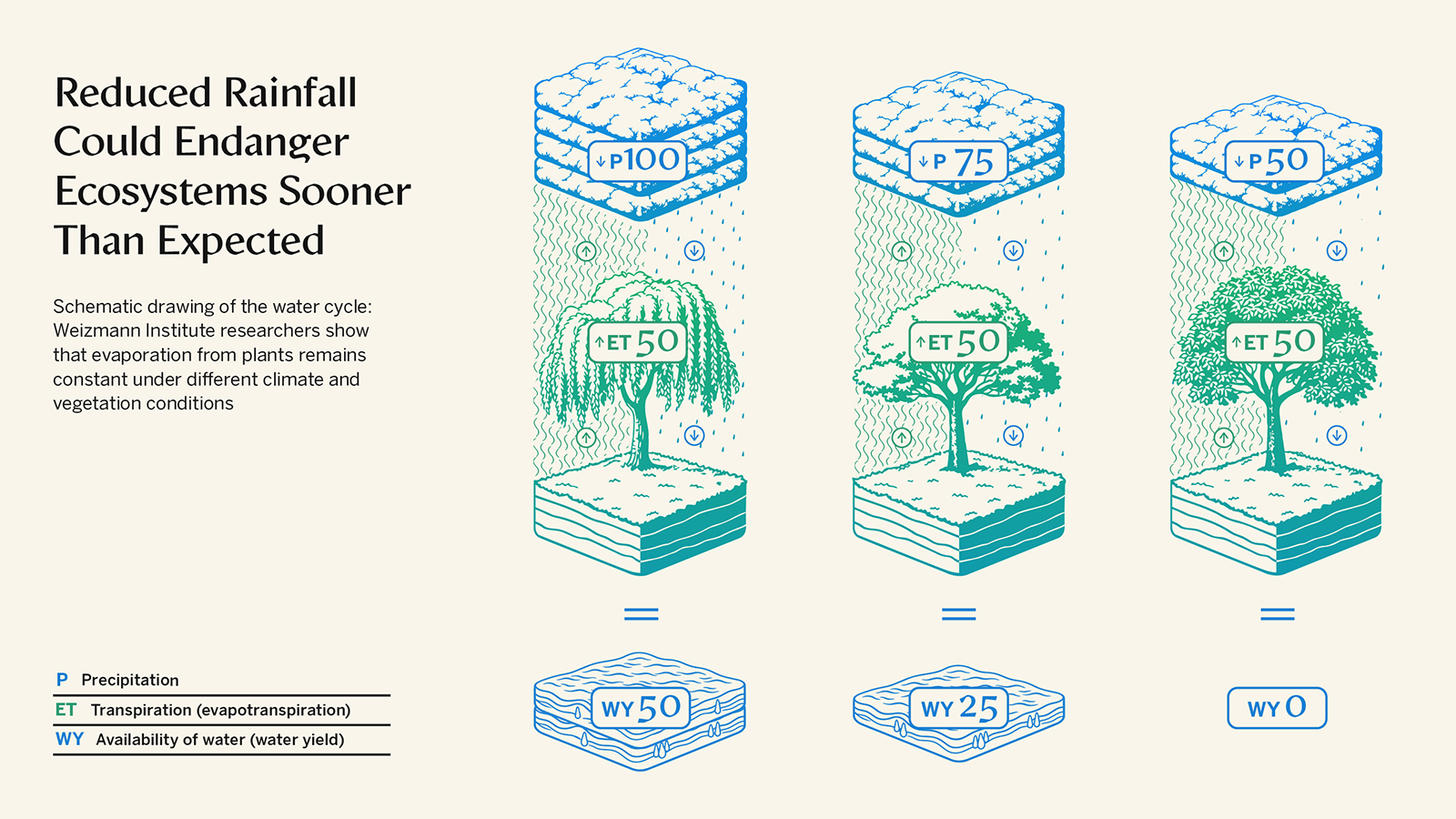
REHOVOT, ISRAEL — February 23, 2026 — “How much rain fell?” is a key question in any discussion about climate. But perhaps there is an even more important one. Like any household budget, the global water economy is based on “income,” that is, water entering the system as precipitation, and “expenditure” – water leaving the system through various forms of evaporation. On land, water evaporates mainly through vegetation, in a process known as evapo-transpiration.
In a late 2025 study published in Nature Communications, scientists at the Weizmann Institute of Science found that, contrary to previous assumptions, evapo-transpiration has a stable upper limit, remaining constant under different climate and vegetation conditions.
“The ecosystems in arid regions, such as Israel, are more sensitive to climate change than we previously thought and are closer to their survival threshold."
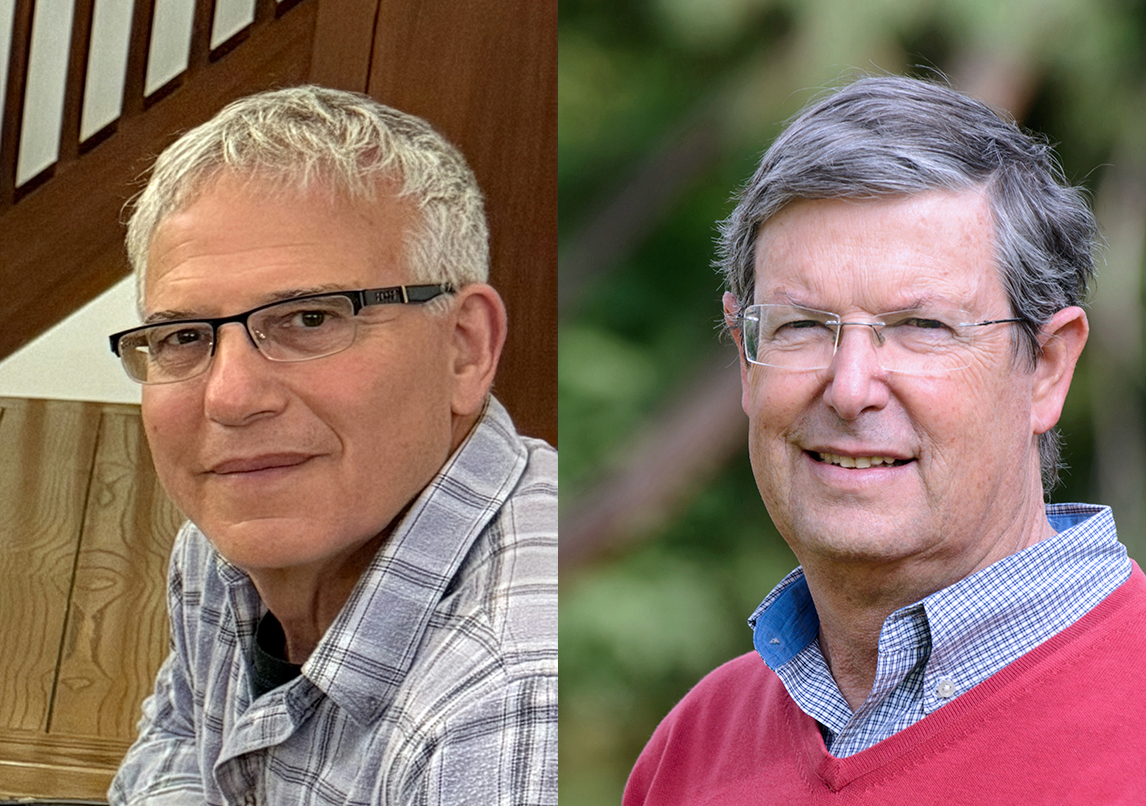
The research team, led by Dr. Eyal Rotenberg, a staff scientist in the group of Israel Prize laureate Prof. Dan Yakir, based their study on projections from climate models and on long-term data from FLUXNET – a global network of measurement stations at hundreds of sites worldwide that has monitored exchanges of carbon (CO₂), water, and energy between terrestrial ecosystems and the atmosphere since the 1990s. Their findings challenge prevailing assumptions in the field and suggest that when it comes to understanding the impacts of climate change on ecosystems and water resources, changes in water availability are a more meaningful metric than precipitation alone.
“Using this metric shows that ecosystems in arid regions, such as Israel, are more sensitive to climate change than we previously thought and are closer to their survival threshold,” Yakir explains. “Humid regions, on the other hand, are more vulnerable to flooding.”
Science Numbers
More than 60 percent of precipitation over the Earth’s land areas returns to the atmosphere through evapo-transpiration, the evaporation of water from plants as part of photosynthesis. In arid regions, this figure can approach 100 percent.
Prof. Dan Yakir is the incumbent of the Hilda and Cecil Lewis Professorial Chair.