
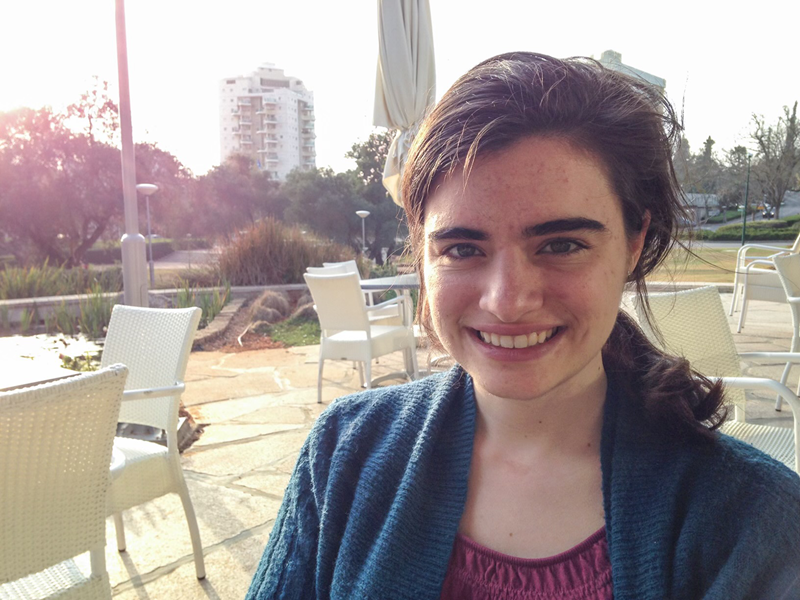
As a young child growing up in Cincinnati, Rachel Brockhage Ellison dreamed of becoming a detective. That early love of investigation eventually led her to biology, and later, to the Feinberg Graduate School (now the Weizmann School of Science) at the Weizmann Institute of Science in Israel. There, she found a love for scientific discovery and a conviction that science and education are two of the most impactful ways to give back to the world.
A Transformative Experience at the Weizmann Institute
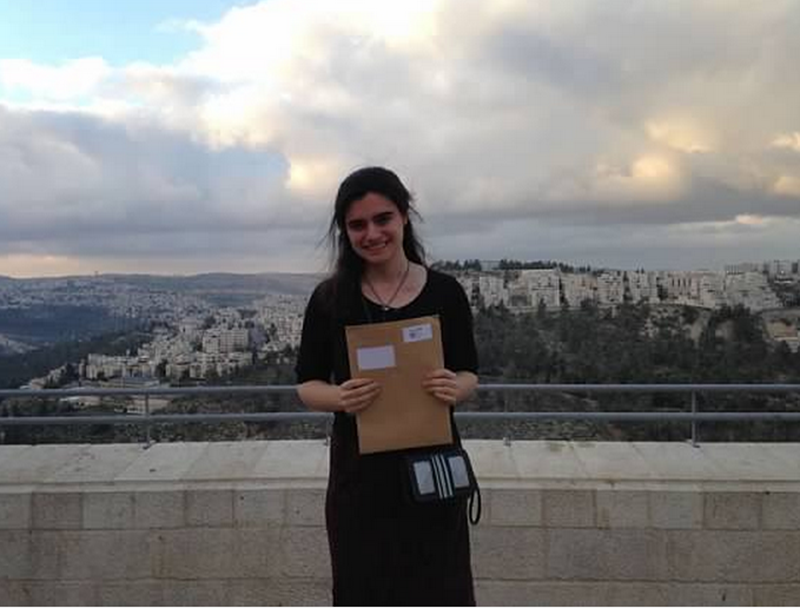
Rachel arrived at the Weizmann Institute in 2012, drawn by its reputation as one of the world’s leading research institutions. “My experience there was transformative,” says Rachel. She was inspired not only by the Institute’s commitment to basic science to help humanity, but also by the vibrant Israeli culture she experienced while living on campus — from Shabbat dinners and Jewish holidays to the Mediterranean lifestyle and strong sense of community.
The convergence of science, faith, and history made Israel — and the Weizmann Institute — feel like a place of personal and professional belonging, deepening Rachel’s conviction that her time there was both meaningful and momentous. "It had a huge impression on me," she said. "That's why it's been a major part of my family's life ever since."
“I hope that the people at Weizmann know that during times like these, they have friends all over the world.” — Rachel Brockhage Ellison
During her graduate training, Rachel completed three lab rotations at Weizmann.
Her first was with Prof. David Wallach, a renowned immunologist who discovered TNF-alpha, a key molecule in cancer research.
Her second was with Dr. Eitan Reuveny, from Weizmann’s Biomolecular Sciences department, who recently discovered a gene that may cause weight gain in older people. There she met Dr. Erez Garty, the current head of Health Impact at the Israeli Ministry of Health.
Her third and final rotation was with Prof. Asaph Aharoni, head of the Department of Plant and Environmental Sciences, whose recent research involves making mescaline available for the development of new psychiatric drugs. Working in this lab, Rachel discovered her passion for plant genetics and conducted lipidomics research on meristematic tissue — the stem cells of plants — using metabolomics to profile developmental changes in plant metabolism.
After returning to the U.S., Rachel worked as a researcher in clinical genetics at Cincinnati Children’s Hospital and later as a medical writer at Medpace. Her Weizmann education opened doors even in the earliest days of her career.
Uncovering Family History and Jewish Roots
Rachel’s journey to Weizmann was also deeply personal. Though raised in a Christian household, she has always felt a strong connection to her Jewish roots. Her great-grandmother, Marie Simonsohn, came from a German Jewish family and immigrated to the United States in the 1920s. During her time at Weizmann, Rachel began researching her family history, uncovering letters and stories that revealed the struggles her relatives faced during the Holocaust.
Her cousin Melanie is co-chair of the Board Alumni Council at the Dallas Holocaust and Human Rights Museum. Recently Melanie shared a powerful family story about her mother and grandmother’s journey to the U.S. — which included the Simonsohn family — in conjunction with the “Kindertransport – Rescuing Children on the Brink of War” exhibit.
Giving Back: A Personal and Philanthropic Commitment
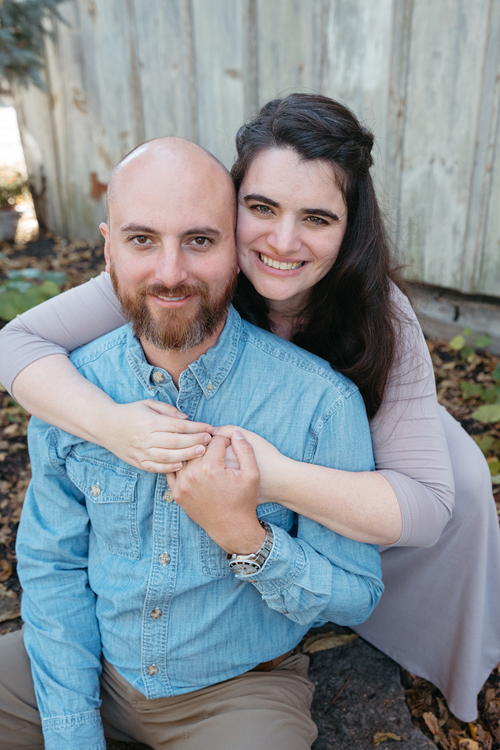
Rachel and her husband donate regularly to the American Committee for the Weizmann Institute of Science, confident that their donation will be used in “extraordinary ways,” and most recently made a gift to the Emergency and Recovery Fund. “We want to help advance the mission of the Institute in whatever way we can,” says Rachel.
Her firsthand experience showed her how instrumental American donors have been in advancing science at Weizmann. Now, she sees her support as a way to repay an institute that she loves. “The education was free, I received a stipend, and I don’t take that for granted,” she said. (Weizmann Institute of Science graduate students are guaranteed a tuition-free education.) “There were so many excellent students in Israel who wanted to study at Feinberg. I was very thankful to be accepted.”
Rachel remains deeply grateful to be part of the Weizmann global community — a network of scientists, supporters, advocates, and donors around the world working together to advance science for the future of humanity — and stays in touch with several professors and fellow graduate students.
Balancing Motherhood, Mission, and Meaning
Today, Rachel and Andrew are proud, steadfast friends of the Weizmann Institute. Rachel is a devoted wife and mother of four, and together the Ellisons continue to invest in education, discovery, and the belief in a greater purpose. Her husband, formerly CEO of a family-owned aerospace company, shares her passion for Israel. Together, they have directed much of their philanthropy toward Jewish causes and the Weizmann Institute. “The global rise in antisemitism is alarming,” said Rachel. “I hope that the people at Weizmann know that during times like these, they have friends all over the world.”
While currently focused on motherhood, Rachel continues to champion the Institute through her advocacy, engagement, and charitable giving — all inspired by the timeless lessons she learned during her time at Weizmann.
Help train the next generation of scientists, support women in science, and help grow Weizmann’s new, groundbreaking MD-PhD program by making a donation today.